How Brazil can contribute to global food security
By 2050, global food demand is expected to increase by approximately 70%, driven by population growth. In this context, Africa is projected to be the continent with the highest demographic expansion in the coming decades, according to estimates from the FAO and the United Nations.
This growth brings with it a central challenge for humanity: ensuring food production in sufficient quantity, in a sustainable and accessible way. Among these foods, animal protein plays a fundamental role in human nutrition.
Although tropical regions account for about 70% of the world’s cattle herd, they contribute only 30% of total production. There is land. There is cattle. But there is a lack of productivity.
According to a report by The Economist, average milk production in Latin America is around 30 liters per day, while in Africa it is only 1.6 liters per day — highlighting the need for genetic improvement focused on productivity.
The fact that Brazil is today the world’s largest exporter of beef is no coincidence. It is the result of decades of investment in genetic improvement and in the development of breeds not only adapted to tropical conditions, but also highly productive and profitable.
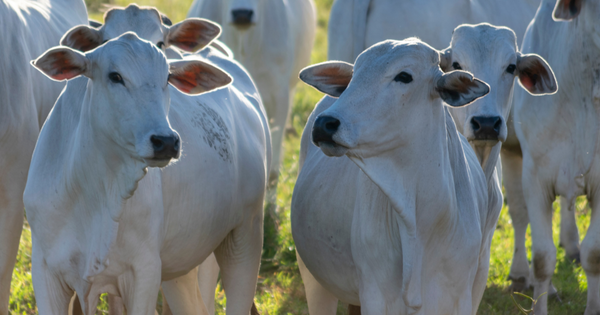
Zebu genetics and their crossbreeding make it possible to combine rusticity, productive efficiency, and high-quality meat and milk, even in environments with high temperatures and challenging conditions.
Through reproductive biotechnologies — especially embryo production and transfer — this genetics can be exported worldwide, transforming herds within a single generation.
The result is the development of more productive and efficient herds, capable of directly benefiting producers and increasing the availability of high-quality animal protein, contributing to the global challenge of food security.